At Somnipharm we prescribe Daridorexant (QUVIVIQ®) for insomnia.
Here is some information about the medication:
Tired but Wired, the advantages of Daridorexant (QUVIVIQ®)
Many people with insomnia describe feeling physically exhausted but mentally alert, making it difficult to switch off and fall asleep. This state of “hyperarousal” can be driven by stress, learned sleep-related behaviours, and overactivity of the brain’s wakefulness systems.
One of the key chemicals involved in wakefulness is orexin, a neuropeptide that helps keep us awake and alert. Research suggests that persistent orexin activity may contribute to insomnia by promoting wakefulness at night and impairing daytime functioning.
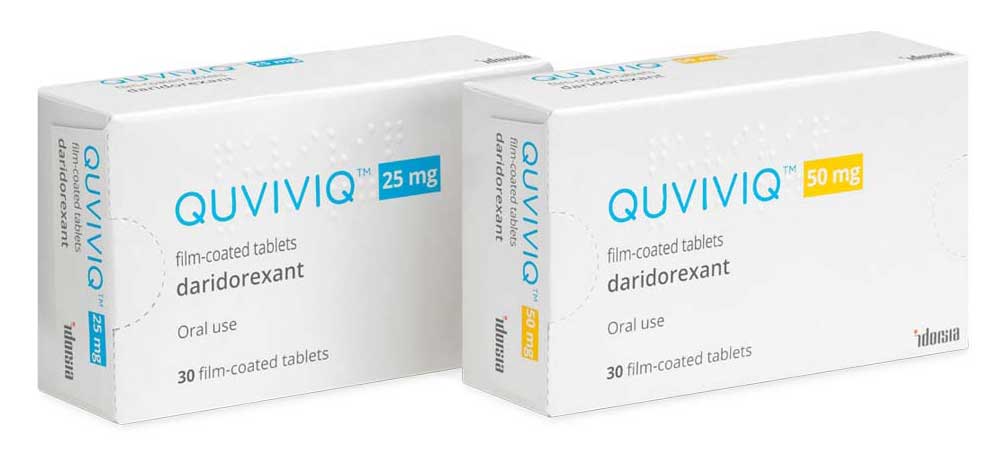
Daridorexant (QUVIVIQ®) is a newer treatment for insomnia that works by blocking the action of orexin. Unlike traditional sleeping tablets, it targets the brain’s wake-promoting pathways rather than causing widespread sedation. This helps support more natural, restorative sleep without altering normal sleep architecture.
Clinical studies have shown that daridorexant can help people:
- Fall asleep faster
- Spend less time awake during the night
- Increase total sleep time
- Improve daytime functioning and alertness
Benefits have been shown to persist with long-term use, with studies demonstrating sustained effectiveness for up to 12 months. Clinical trials also found no evidence of physical dependence, withdrawal symptoms, or abuse potential when treatment was discontinued. This is why I have decided to prescribe this medication over others for the treatment of insomnia.
Assessment
Assess whether treatment is clinically appropriate and safe for you…
Possible Side Effects of Daridorexant (QUVIVIQ®)
As with all medicines, Daridorexant (QUVIVIQ®) can cause side effects, although not everybody experiences them.
Common side effects (affecting up to 1 in 10 people) include:
- Headache
- Daytime sleepiness (somnolence)
- Dizziness
- Nausea
- Fatigue
Uncommon side effects (affecting up to 1 in 100 people) include:
- Sleep paralysis (a temporary inability to move or speak when falling asleep or waking)
- Hallucinations occurring as you fall asleep or wake up
These sleep-related effects are most likely to occur during the first few weeks of treatment. Rarely, symptoms like mild cataplexy (sudden muscle weakness) have been reported with medicines in this class.
Before prescribing, I will assess whether Daridorexant (QUVIVIQ®) is suitable for you and discuss the potential benefits and risks. If you experience any unusual symptoms while taking the medication, you should seek medical advice promptly.
Interaction with other medication
Daridorexant (QUVIVIQ®) can interact with a wide range of prescription medicines, over-the-counter treatments, herbal supplements, and alcohol. Some interactions may increase side effects such as drowsiness, while others can affect how well the medication works.
Daridorexant will interact with:
- Sleeping tablets or sedatives
- Opioid painkillers
- Medicines for anxiety or depression
- Antipsychotic medications
- Epilepsy treatments
- Certain antibiotics and antifungal medicines
- Some HIV treatments
- Herbal remedies such as St John’s Wort
Before prescribing, I will review your current medications, medical history, and any supplements you take to ensure treatment is safe and appropriate for you.
Is Daridorexant (QUVIVIQ®) Right for You?
Daridorexant is not suitable for everyone. Before prescribing, I carry out a comprehensive assessment to ensure the treatment is safe and appropriate for your individual circumstances.
Contraindications:
These patients will not be eligible to take Daridorexant
- Hypersensitivity to the active substance or to any of the excipients
- Narcolepsy
- Concomitant use with strong CYP3A4 inhibitors e.g. clarithromycin
Where particular care may be needed in patients which:
- Have a history of alcohol or substance misuse
- Have depression, suicidal thoughts, or other mental health conditions
- Take medicines that cause drowsiness or affect the central nervous system
- Regularly consume alcohol
- Have chronic respiratory conditions such as severe COPD
- Have significant liver impairment
- Are over 75 years of age
- Are at increased risk of falls
Because Daridorexant (QUVIVIQ®) works by reducing wakefulness, some people may experience next-day drowsiness, particularly when starting treatment. Patients should avoid driving, operating machinery, or undertaking hazardous activities until they know how the medication affects them and feel fully alert.
A thorough clinical assessment helps identify any factors that may influence treatment choice, ensuring the safest and most effective approach to improving sleep.
Sleep problems that require a different assessment or treatment approach
Not all sleep problems are caused by insomnia. Sleep may be disrupted by other sleep disorders that require a different approach to diagnosis and treatment, including:
- Sleep-related breathing disorders, such as obstructive sleep apnoea
- Sleep-related movement disorders, such as restless legs syndrome
- Central disorders of hypersomnolence, such as narcolepsy
- Parasomnias, including sleepwalking and night terrors
- Circadian rhythm sleep-wake disorders, such as shift work disorder
As part of the assessment process, you will complete a screening questionnaire to identify whether another sleep disorder may be contributing to your symptoms.
If there is evidence of an alternative sleep disorder, you may not be suitable for this service and may be advised to seek further assessment through your GP or an appropriate sleep specialist. This helps ensure you receive the most appropriate care for your condition.